
 ,
Md. Jakir Hossen,
Md. Ashikur Rahman,
Mohammad Zoynal Abedin*,
Jahirul Islam,
Nurul Hoda Sanid,
Zahid Ahsan,
Amanullah Moral,
Md. Saiful Islam,
Al-Amin,
Md. Tasdid Hasan,
Md Sajedul Islam,
Md. Erfanul Hasan Sakib,
Md. Abdulla Al Korais,
Abdur Rahman Muin,
Md. Mobashir Hosain,
Md. Fardouse Alam,
Mohammad Monirul Kabir Mridha,
Md. Hossain Ali,
Md. Rezaul Karim Sikder,
Shariful Islam,
Md Ashraful Islam Bhuiyan
,
Md. Jakir Hossen,
Md. Ashikur Rahman,
Mohammad Zoynal Abedin*,
Jahirul Islam,
Nurul Hoda Sanid,
Zahid Ahsan,
Amanullah Moral,
Md. Saiful Islam,
Al-Amin,
Md. Tasdid Hasan,
Md Sajedul Islam,
Md. Erfanul Hasan Sakib,
Md. Abdulla Al Korais,
Abdur Rahman Muin,
Md. Mobashir Hosain,
Md. Fardouse Alam,
Mohammad Monirul Kabir Mridha,
Md. Hossain Ali,
Md. Rezaul Karim Sikder,
Shariful Islam,
Md Ashraful Islam Bhuiyan
Bangladesh's entry into the nuclear age with the construction of its first commercial nuclear power project, the Rooppur Nuclear Power Plant (RNPP), featuring two Generation III+ VVER-1200 units supplied by the Russian Federation, is a significant step towards achieving energy security. However, this significant technological advancement necessitates the parallel establishment of robust, internationally compliant strategies for the safe and sustainable management of radioactive waste (RW). This comprehensive review systematically synthesizes the proposed and implemented approaches for RW treatment, disposal, and regulatory oversight at the Rooppur Nuclear Power Plant, providing a critical analysis of the country's "National Policy on Radioactive Waste and Spent Nuclear Fuel Management-2019" and associated bilateral agreements. The primary finding highlights the strategic success of the policy, which mandates the repatriation of all high-level waste (Spent Nuclear Fuel, SNF) back to Russia, thereby eliminating the nation's most significant long-term nuclear liability. This agreement effectively offloads the burden of managing an estimated 50-60 tons of highly radioactive waste annually (fuel inventory and discharge estimates commensurate with 2.4 GWe plant capacity). Conversely, the review focuses on the domestic challenge of managing Low and Intermediate-Level Waste (LILW), examining the specialized technical systems for treating solid radioactive waste (SRW), liquid radioactive waste (LRW), and gaseous waste, including solidification processes and interim storage plans. Furthermore, the paper critically outlines the required strengthening of the regulatory framework under the Bangladesh Atomic Energy Regulatory Authority (BAERA) and identifies critical long-term gaps. These gaps include the absence of a formalized repository for final disposal of Low and Intermediate-Level Waste, the need for fully capitalized financial assurance funds, and the necessity for sustained investment in institutional capacity and human resources. This review contributes a vital synthesis to the literature on nuclear new build programs, particularly for developing nations, by detailing strategic solutions and outlining the immediate technical, regulatory, and financial priorities required to ensure the long-term safety and sustainability of the Rooppur Nuclear Power Plant.
| Published in | American Journal of Energy Engineering (Volume 14, Issue 2) |
| DOI | 10.11648/j.ajee.20261402.11 |
| Page(s) | 45-55 |
| Creative Commons |
This is an Open Access article, distributed under the terms of the Creative Commons Attribution 4.0 International License (http://creativecommons.org/licenses/by/4.0/), which permits unrestricted use, distribution and reproduction in any medium or format, provided the original work is properly cited. |
| Copyright |
Copyright © The Author(s), 2026. Published by Science Publishing Group |
Radioactive Waste Management, Rooppur Nuclear Power Plant, Waste Treatment, Spent Nuclear Fuel, Bilateral Agreement, VVER-1200, Bangladesh Atomic Energy Regulatory Authority, International Atomic Energy Agency
Parameters: Value/ Type | Parameters: Value/ Type |
|---|---|
Project Owner: Bangladesh Atomic Energy Commission (BAEC) | Design Service Life: 60 years (min.) to 90 years (max.) |
Technology Supplier: Rosatom (Russian Federation) | Gross Electrical output: 1,200 MWe (per unit) |
Reactor Type: VVER-1200 / V-523 (Generation III+) | Thermal output: 3,200 MWt (per unit) |
Number of Reactors: 2 Units | Heat supply capacity: 300 MWt |
Power Units 2: RNPP-I and RNPP-II | Plant Efficiency: >90% |
Cooling Source: Padma River | Labor-Power Ratio: 0.35 to 0.5 person/MW |
Cooling Infrastructure: 2 Natural Draft Cooling Towers | Fuel Campaigning Duration: 4 years (min.) |
Net Electrical Output: approx. 1,158 MWe (per unit) | Max Fuel Burn-up: 60 MWd/kgU |
Total Plant Capacity: 2,400 MWe (gross) | Refuelling Frequency: 12 to 18 months |
SL No. | Waste Category | Specific Waste Type/ Form | Treatment/ Composition (Source) | Ref. |
|---|---|---|---|---|
01. | Very Low-Level Waste | Clothing | Slightly contaminated materials. | [16] |
02. | Very Low-Level Waste | Filters | Slightly contaminated materials, from gas/ liquid processing | [16] |
03. | Very Low-Level Waste | Construction Waste | Slightly contaminated materials (e.g., during decommissioning) | [16] |
04. | Low-Level Waste | Contaminated Tools | Low activity items | [16] |
05. | Low-Level Waste | Resins (non-specific, implied) | Low activity items, generated from ion-exchange processes | [16] |
06. | Low-Level Waste | Sludges | Low activity items, often resulting from liquid waste treatment | [16] |
07. | Intermediate-Level Waste | Reactor Internals | Higher activity items, require shielding but not heat management | [17] |
08. | Intermediate-Level Waste | Some Ion-Exchange Resins | Higher activity items, require shielding but not heat management | [17] |
09. | Liquid Radioactive Waste | Corrosive Liquids | Highly mobile and corrosive; treated by chemical precipitation, ion exchange, and electrodialysis | [19] |
10. | Liquid Radioactive Waste | Aqueous Effluents | Liquid streams requiring removal of contaminants | [19] |
11. | High-Level Waste | Spent Nuclear Fuel | Highly radioactive, generates significant heat, consists of used fuel assemblies | [21] |
12. | High-Level Waste Quantity | 50-60 tons annually | Estimated annual production based on RNPP's 2.4 GWe capacity | [21] |
13. | Gaseous Waste | Radioactive Gases | Processed through filtration and adsorption systems to remove radionuclides | [22] |
14. | Solid Waste (General) | Conditioned Waste Packages | Residues from liquid treatment or processed VLLW/ LLW/ ILW | [22] |
15. | Solid Waste (General) | Sludge Handling Modules | Residues generated from liquid waste treatment (mentioned in LRW equipment) | [26] |
BAERA | Bangladesh Atomic Energy Regulatory Authority |
BAEC | Bangladesh Atomic Energy Commission |
ESIA | Environmental and Social Impact Assessment |
IAEA | International Atomic Energy Agency |
IRRS | Integrated Regulatory Review Service |
IGA | Intergovernmental Agreement |
NPCBL | Nuclear Power Plant Company Bangladesh Limited |
RNPP | Rooppur Nuclear Power Plant |
m³ | Cubic Meter (Unit of Volume) |
GWe | Gigawatts Electric (Electrical Output) |
MWe | Megawatt Electric (Electrical Output) |
MWt | Megawatts Thermal (Thermal Output) |
VVER-1200 | Vodo-Vodyanoi Energetichesky Reaktor (Water-Water Energetic Reactor-1200 MWe) |
| [1] | Karim, R., Karim, M. E., Muhammad-Sukki, F., Abu-Bakar, S. H., Bani, N. A., Munir, A. B., & Mas’ ud, A. A. (2018). Nuclear energy development in Bangladesh: A study of opportunities and challenges. Energies, 11(7), 1672. |
| [2] |
Mizanur Rahman, M., Ajijul Hoq, M., & Abu Khaer, M. (2021). Radiological Safety Assessment Due to Severe Accidental Conditions of VVER-1200 Reactor of Bangladesh (pp. p. 240-241). URL:
https://www.iaea.org/events/international-conference-on-radiation-safety-2020 |
| [3] | Faisal, S. I., Islam, M. S., & Soner, M. A. M. (2023). Prediction of radioactivity releases for a Long-Term Station Blackout event in the VVER-1200 nuclear reactor of Bangladesh. Nuclear Engineering and Technology, 55(2), 696-706. |
| [4] | Task Committee on Nuclear Effects of the Committee on Air, Noise and Radiation Management of the Environmental Engineering Division, American Society of Civil Engineers. (1982). Nuclear Waste Management. Journal of the Environmental Engineering Division, 108(1), 1-50. |
| [5] | Manohar, S., Sugilal, G., Bajpai, R. K., Kaushik, C. P., & Raj, K. (2023). Radioactive waste management. In Nuclear fuel cycle (pp. 255-331). Singapore: Springer Nature Singapore. |
| [6] | Uddin, M. G., Moniruzzaman, M., & Khan, M. (2017). Evaluation of groundwater quality using CCME water quality index in the Rooppur Nuclear Power Plant Area, Ishwardi, Pabna, Bangladesh. American Journal of Environmental Protection, 5(2), 33-43. |
| [7] |
Wikipediaorg. 2025. Wikipediaorg. [Online]. Available from:
https://en.wikipedia.org/wiki/Ishwardi_Upazila [Last visited on: 18 Oct., 2025]. |
| [8] | Kader, M. S. F., Kar, T. S., & Nahar, A. (2024). Rooppur Nuclear Power Plant: A New Era for Power Sector in Bangladesh, Volume 9, Issue 3, pp. 110-115. ISSN (Online): 2455-9024. |
| [9] | Abram, T., & Ion, S. (2008). Generation-IV nuclear power: A review of the state of the science. Energy Policy, 36(12), 4323-4330. |
| [10] | Vujić, J., Antić, D. P., & Vukmirović, Z. (2012). Environmental impact and cost analysis of coal versus nuclear power: The US case. Energy, 45(1), 31-42. |
| [11] |
VVER plant layout, Retrieved from: The VVER today: Evolution, Design, Safety, pp-21. URL:
www.rosatom.ru/upload/iblock/0be/0be1220af25741375138ecd1afb18743.pdf |
| [12] | Ye, D., Lai, X., Luo, Y., & Liu, A. (2020). Diagnostics of nuclear reactor coolant pump in transition process on performance and vortex dynamics under station blackout accident. Nuclear Engineering and Technology, 52(10), 2183-2195. |
| [13] |
RNPP brochure of govt.; Retrieved from:
http://rooppurnpp.portal.gov.bd/site/page/f2c25f5a-787e-44b7-9899-1a5c64504b46 [Last visited on: 18 Oct., 2025]. |
| [14] | Haydar, M. A., Hasan, M. M., Jahan, I., Fatema, K., Ali, M. I., Paul, D., & Khandaker, M. U. (2021). The status of NORMs in natural environment adjacent to the Rooppur nuclear power plant of Bangladesh. Nuclear Engineering and Technology, 53(12), 4114-4121. |
| [15] | Saha, S. A. B. H. A. S. A. C. H. I., Koushik, R., Souvik, R., & Asfakur RMd, Z. H. (2018). Rooppur nuclear power plant: current status & feasibility. Journal of mechanical engineering, vol. 68, no. 3, 167 - 182. |
| [16] | Rahman, R. O. A., Rakhimov, R. Z., Rakhimova, N. R., & Ojovan, M. I. (2014). Cementitious materials for nuclear waste immobilization. John Wiley & Sons. |
| [17] | Kumari, I., Kumar, P., & Srihari, B. K. (2025). Radioactive Waste: Treatment and Management. Global Waste Management, 195-214. |
| [18] | Hou, X., & Roos, P. (2008). Critical comparison of radiometric and mass spectrometric methods for the determination of radionuclides in environmental, biological and nuclear waste samples. Analytica chimica acta, 608(2), 105-139. |
| [19] | Turick, C. E., & Berry, C. J. (2016). Review of concrete biodeterioration in relation to nuclear waste. Journal of Environmental Radioactivity, 151, 12-21. |
| [20] | F. Yeasmin, "Nuclear Waste Management in the context of the Rooppur Nuclear Power Plant: Challenges and Opportunities for Bangladesh," SSRG International Journal of Industrial Engineering, vol. 8, no. 1, pp. 1-6, 2021. ISSN: 2349 - 9362 |
| [21] | Ahmed, I., Joni, H. D., & Pranti, H. N. (2019). Study of radioactive waste management of nuclear power plant: prospect of Rooppur Nuclear Power Plant. Global J. Res. Eng.: Mech. Mech. Eng, 19, 69-79. |
| [22] | Okoshi, M., & Momma, T. (2015). Radioactive waste treatment technologies. In Radioactive Waste Engineering and Management (pp. 119-151). Tokyo: Springer Japan. |
| [23] | Government of Bangladesh, Ministry of Science and Technology, "National Policy for the Management of Radioactive Waste and Spent Nuclear Fuel-2019," Extraordinary Gazette, October 31, 2019. |
| [24] | Mahmud, A. A., Soner, M. A. M., Hossain, M. M., Hossain, M. S., Usha, T. Y., Islam, M. M., & Jahan, N. (2022). Experiences and challenges of nuclear safeguards activities in Bangladesh. International Journal of Nuclear Safety and Security, 1(2), 124-136. |
| [25] | Mikhailov, S. A. (2022). History and prospects of cooperation between Russia, India and Bangladesh in the field of nuclear energy. RUDN Journal of World History, 14(4), 427-442. |
| [26] |
The Business Standard (TBS), "Deal signed for liquid radioactive waste management at Rooppur NPP,” July 6, 2022. (Online). Available:
https://www.tbsnews.net/bangladesh/environment/deal-signed-liquid-radioactive-waste-management-rooppur-npp-454302 [Last visited on: 18 Oct., 2025]. |
| [27] | Rahman, A. (2023, January). Creation of a Disposal Facility for the Very Low-Level Radioactive Waste at the Rooppur Nuclear Power Plant (RNPP). In International Conference on the Safety of Radioactive Waste Management, Decommissioning, Environmental Protection and Remediation: Ensuring Safety and Enabling Sustainability. Book of Abstracts (No. IAEA-CN--318, pp. 153-153). URL: |
| [28] |
Jha, S. (2018). Building Rooppur: Saurav Jha looks at the unique role India will have in providing industrial support for Bangladesh's Rooppur nuclear plant. Nuclear Engineering International, 63(771), 14-16. URL:
https://link.gale.com/apps/doc/A560685445/AONE?u=anon~307edc7e&sid=googleScholar&xid=dd606d1c |
| [29] | International Atomic Energy Agency (IAEA), “IAEA Observes Commitment to Operational Safety at Bangladesh’s First Nuclear Power Plant,” Press Release on Pre-OSART Mission, Vienna, August 2025. |
| [30] | Fahim, F., Al Farabi, A., Hasan, M. S., & Sayam, S. N. R. (2024). Nuclear energy In Bangladesh: A SWOT analysis. Heliyon, 10(11). |
| [31] | Alfee, S. L., & Islam, M. S. (2021). Assessment of public perception towards the radioactive waste management of Bangladesh. Progress in Nuclear Energy, 140, 103916. |
| [32] | Abedin, M. Z., Rahman, M. W., & Chowdhury, M. S. (2023). Efficiency analysis of nuclear power plants: A comprehensive review. World Journal of Advanced Research and Reviews. |
| [33] | A. R. Rasel, Rosatom to manage radioactive waste at Rooppur plant, Dhaka Tribune, October 22, 2025. |
| [34] | Miah, M. A. H. (2023). Welding Defects Analysis with Various Alloys Using TIG and MIG Welding Process, Transactions on Engineering and Computing Sciences, 11(4), pp. 99-116. |
| [35] | Islam, S., Abedin, M. Z., Ahsan, Z., Miah, M. A. H., Iqubal, A. M. S., Ahmed, M. M. S., Rahman, M., Hye, M. A., Sikder, M. R. K., Gani, M. O., Islam, M. A., & Kiron, M. S. M. (2023). Questionnaires with Answers on the Automotive Engine Fundamentals: Bangladesh Perspective. American Journal of Mechanical and Industrial Engineering, 8(3), 55-82. |
| [36] | GUIDE, D. S. (2010). IAEA Safety Standards. Structure, 1(1.10), 1-10. |
APA Style
Islam, S., Hossen, M. J., Rahman, M. A., Abedin, M. Z., Islam, J., et al. (2026). Radioactive Waste Management and Safety Frameworks for VVER-1200 Reactors at the Rooppur Nuclear Power Plant: A Comprehensive Review. American Journal of Energy Engineering, 14(2), 45-55. https://doi.org/10.11648/j.ajee.20261402.11
ACS Style
Islam, S.; Hossen, M. J.; Rahman, M. A.; Abedin, M. Z.; Islam, J., et al. Radioactive Waste Management and Safety Frameworks for VVER-1200 Reactors at the Rooppur Nuclear Power Plant: A Comprehensive Review. Am. J. Energy Eng. 2026, 14(2), 45-55. doi: 10.11648/j.ajee.20261402.11
@article{10.11648/j.ajee.20261402.11,
  author = {Samsul Islam and Md. Jakir Hossen and Md. Ashikur Rahman and Mohammad Zoynal Abedin and Jahirul Islam and Nurul Hoda Sanid and Zahid Ahsan and Amanullah Moral and Md. Saiful Islam and Al-Amin and Md. Tasdid Hasan and Md Sajedul Islam and Md. Erfanul Hasan Sakib and Md. Abdulla Al Korais and Abdur Rahman Muin and Md. Mobashir Hosain and Md. Fardouse Alam and Mohammad Monirul Kabir Mridha and Md. Hossain Ali and Md. Rezaul Karim Sikder and Shariful Islam and Md Ashraful Islam Bhuiyan},
  title = {Radioactive Waste Management and Safety Frameworks for VVER-1200 Reactors at the Rooppur Nuclear Power Plant: A Comprehensive Review},
  journal = {American Journal of Energy Engineering},
  volume = {14},
  number = {2},
  pages = {45-55},
  doi = {10.11648/j.ajee.20261402.11},
  url = {https://doi.org/10.11648/j.ajee.20261402.11},
  eprint = {https://article.sciencepublishinggroup.com/pdf/10.11648.j.ajee.20261402.11},
  abstract = {Bangladesh's entry into the nuclear age with the construction of its first commercial nuclear power project, the Rooppur Nuclear Power Plant (RNPP), featuring two Generation III+ VVER-1200 units supplied by the Russian Federation, is a significant step towards achieving energy security. However, this significant technological advancement necessitates the parallel establishment of robust, internationally compliant strategies for the safe and sustainable management of radioactive waste (RW). This comprehensive review systematically synthesizes the proposed and implemented approaches for RW treatment, disposal, and regulatory oversight at the Rooppur Nuclear Power Plant, providing a critical analysis of the country's "National Policy on Radioactive Waste and Spent Nuclear Fuel Management-2019" and associated bilateral agreements. The primary finding highlights the strategic success of the policy, which mandates the repatriation of all high-level waste (Spent Nuclear Fuel, SNF) back to Russia, thereby eliminating the nation's most significant long-term nuclear liability. This agreement effectively offloads the burden of managing an estimated 50-60 tons of highly radioactive waste annually (fuel inventory and discharge estimates commensurate with 2.4 GWe plant capacity). Conversely, the review focuses on the domestic challenge of managing Low and Intermediate-Level Waste (LILW), examining the specialized technical systems for treating solid radioactive waste (SRW), liquid radioactive waste (LRW), and gaseous waste, including solidification processes and interim storage plans. Furthermore, the paper critically outlines the required strengthening of the regulatory framework under the Bangladesh Atomic Energy Regulatory Authority (BAERA) and identifies critical long-term gaps. These gaps include the absence of a formalized repository for final disposal of Low and Intermediate-Level Waste, the need for fully capitalized financial assurance funds, and the necessity for sustained investment in institutional capacity and human resources. This review contributes a vital synthesis to the literature on nuclear new build programs, particularly for developing nations, by detailing strategic solutions and outlining the immediate technical, regulatory, and financial priorities required to ensure the long-term safety and sustainability of the Rooppur Nuclear Power Plant.},
 year = {2026}
}
TY  - JOUR
T1  - Radioactive Waste Management and Safety Frameworks for VVER-1200 Reactors at the Rooppur Nuclear Power Plant: A Comprehensive Review
AU  - Samsul Islam
AU  - Md. Jakir Hossen
AU  - Md. Ashikur Rahman
AU  - Mohammad Zoynal Abedin
AU  - Jahirul Islam
AU  - Nurul Hoda Sanid
AU  - Zahid Ahsan
AU  - Amanullah Moral
AU  - Md. Saiful Islam
AU  - Al-Amin
AU  - Md. Tasdid Hasan
AU  - Md Sajedul Islam
AU  - Md. Erfanul Hasan Sakib
AU  - Md. Abdulla Al Korais
AU  - Abdur Rahman Muin
AU  - Md. Mobashir Hosain
AU  - Md. Fardouse Alam
AU  - Mohammad Monirul Kabir Mridha
AU  - Md. Hossain Ali
AU  - Md. Rezaul Karim Sikder
AU  - Shariful Islam
AU  - Md Ashraful Islam Bhuiyan
Y1  - 2026/04/10
PY  - 2026
N1  - https://doi.org/10.11648/j.ajee.20261402.11
DO  - 10.11648/j.ajee.20261402.11
T2  - American Journal of Energy Engineering
JF  - American Journal of Energy Engineering
JO  - American Journal of Energy Engineering
SP  - 45
EP  - 55
PB  - Science Publishing Group
SN  - 2329-163X
UR  - https://doi.org/10.11648/j.ajee.20261402.11
AB  - Bangladesh's entry into the nuclear age with the construction of its first commercial nuclear power project, the Rooppur Nuclear Power Plant (RNPP), featuring two Generation III+ VVER-1200 units supplied by the Russian Federation, is a significant step towards achieving energy security. However, this significant technological advancement necessitates the parallel establishment of robust, internationally compliant strategies for the safe and sustainable management of radioactive waste (RW). This comprehensive review systematically synthesizes the proposed and implemented approaches for RW treatment, disposal, and regulatory oversight at the Rooppur Nuclear Power Plant, providing a critical analysis of the country's "National Policy on Radioactive Waste and Spent Nuclear Fuel Management-2019" and associated bilateral agreements. The primary finding highlights the strategic success of the policy, which mandates the repatriation of all high-level waste (Spent Nuclear Fuel, SNF) back to Russia, thereby eliminating the nation's most significant long-term nuclear liability. This agreement effectively offloads the burden of managing an estimated 50-60 tons of highly radioactive waste annually (fuel inventory and discharge estimates commensurate with 2.4 GWe plant capacity). Conversely, the review focuses on the domestic challenge of managing Low and Intermediate-Level Waste (LILW), examining the specialized technical systems for treating solid radioactive waste (SRW), liquid radioactive waste (LRW), and gaseous waste, including solidification processes and interim storage plans. Furthermore, the paper critically outlines the required strengthening of the regulatory framework under the Bangladesh Atomic Energy Regulatory Authority (BAERA) and identifies critical long-term gaps. These gaps include the absence of a formalized repository for final disposal of Low and Intermediate-Level Waste, the need for fully capitalized financial assurance funds, and the necessity for sustained investment in institutional capacity and human resources. This review contributes a vital synthesis to the literature on nuclear new build programs, particularly for developing nations, by detailing strategic solutions and outlining the immediate technical, regulatory, and financial priorities required to ensure the long-term safety and sustainability of the Rooppur Nuclear Power Plant.
VL  - 14
IS  - 2
ER  -
Department of Mechanical Engineering, Dhaka University of Engineering & Technology, Gazipur, Bangladesh
Institute of Energy Engineering, Dhaka University of Engineering & Technology, Gazipur, Bangladesh
Institute of Energy Engineering, Dhaka University of Engineering & Technology, Gazipur, Bangladesh
Department of Mechanical Engineering, Dhaka University of Engineering & Technology, Gazipur, Bangladesh
Department of Mechanical Engineering, Dhaka University of Engineering & Technology, Gazipur, Bangladesh
Department of Mechanical Engineering, Dhaka University of Engineering & Technology, Gazipur, Bangladesh
Department of Mechanical Engineering, Dhaka University of Engineering & Technology, Gazipur, Bangladesh
Aerospace Engineering Department, King Fahd University of Petroleum and Minerals, Saudi Arabia
Department of Mechanical Engineering, Dhaka University of Engineering & Technology, Gazipur, Bangladesh
Department of Mechanical Engineering, Dhaka University of Engineering & Technology, Gazipur, Bangladesh
Department of Mechanical Engineering, Dhaka University of Engineering & Technology, Gazipur, Bangladesh
Department of Mechanical Engineering, Dhaka University of Engineering & Technology, Gazipur, Bangladesh
Department of Mechanical Engineering, Dhaka University of Engineering & Technology, Gazipur, Bangladesh
Department of Mechanical Engineering, Dhaka University of Engineering & Technology, Gazipur, Bangladesh
Institute of Energy Engineering, Dhaka University of Engineering & Technology, Gazipur, Bangladesh
Department of Mechanical Engineering, Dhaka University of Engineering & Technology, Gazipur, Bangladesh
Institute of Energy Engineering, Dhaka University of Engineering & Technology, Gazipur, Bangladesh
Department of Mechanical Engineering, Dhaka University of Engineering & Technology, Gazipur, Bangladesh
Institute of Energy Engineering, Dhaka University of Engineering & Technology, Gazipur, Bangladesh
Department of Mechanical Engineering, Dhaka University of Engineering & Technology, Gazipur, Bangladesh
Department of Energy Transition, Dartmouth College, Hanover, New Hampshire, USA
School of Information Technology Security & Administration, Seneca Polytechnic, Toronto, Ontario, Canada
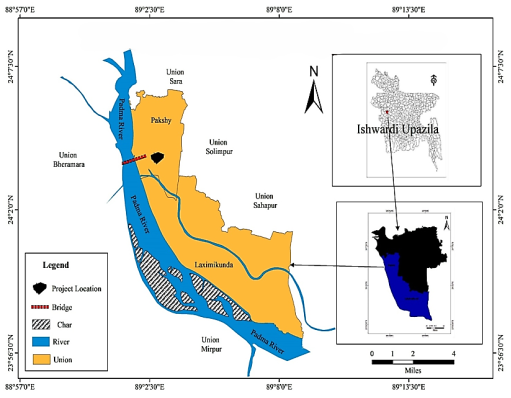
Figure 1. Location of the Rooppur Nuclear Power Plant area, Ishwardi, Pabna, Bangladesh [6].
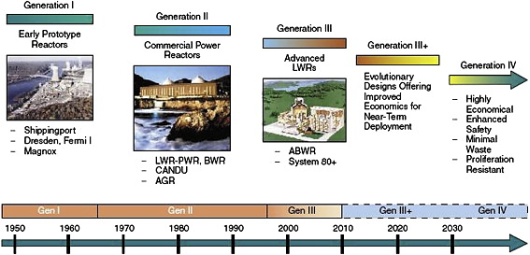
Figure 2. Generations of Nuclear Technologies [8].
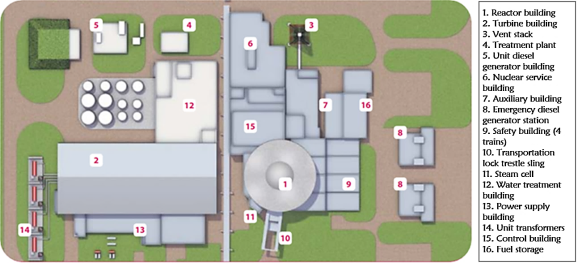
Figure 3. Schematic layout of a typical VVER plant at Rooppur Nuclear Power Plant [11].
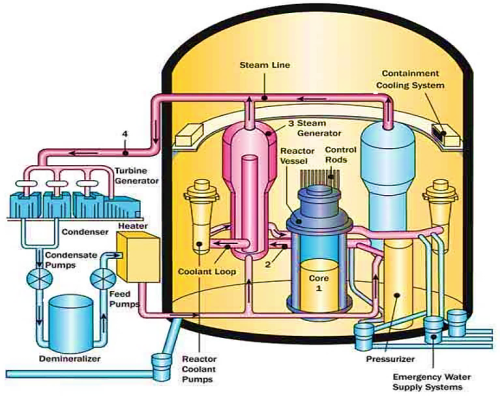
Figure 4. Schematic diagram of reactor head VVER-1200 Gen-III+ at Rooppur Nuclear Power Plant [12].

Figure 5. Radioactive waste categories of nuclear power plants.
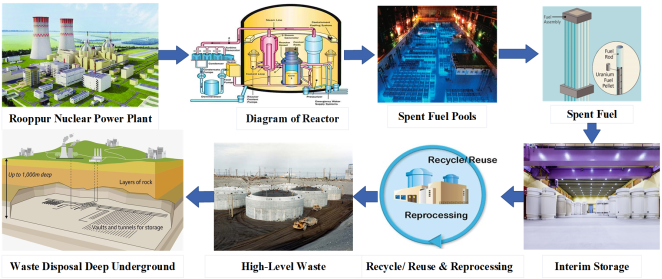
Figure 6. Radioactive Waste Treatment stages at Rooppur Nuclear Power Plant.



 Share This Article
 Twitter
 Linked In
 Facebook
 Copy
Copy Download